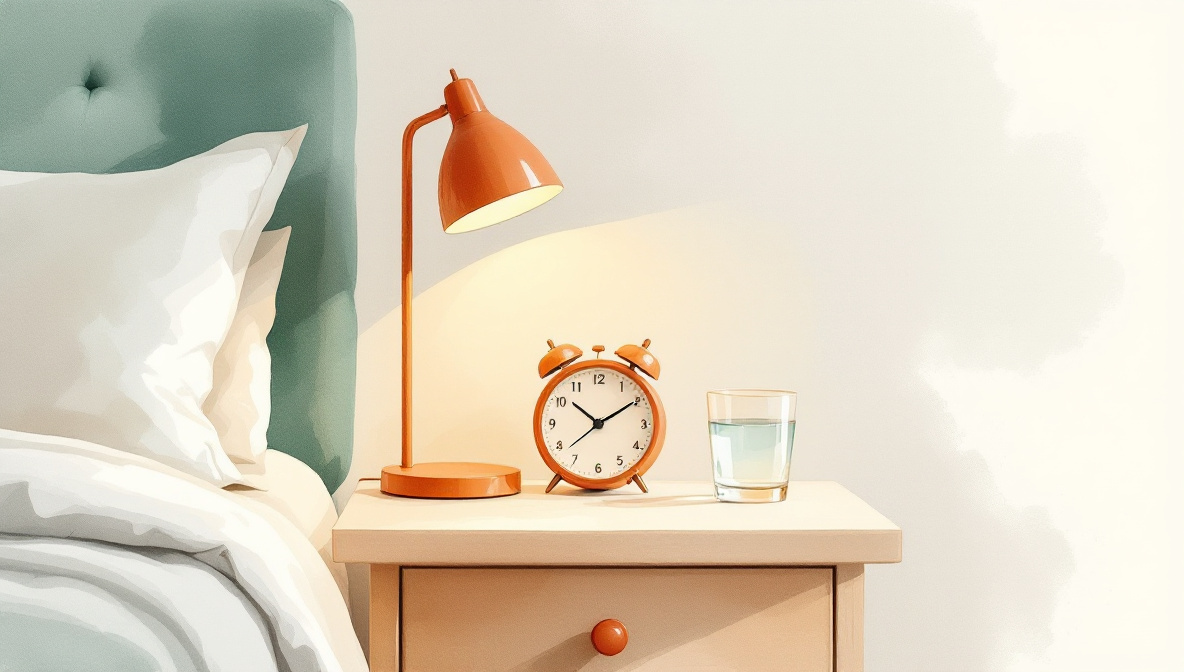
By nine pm your evening has set sleep in motion. Choose a finish line, eat earlier, dim the lights, and park the phone. Two quiet wreckers: late scrolling and after-hours pings.
Short answer. Sleep lands more easily when the evening has edges you can see. By nine pm, set a finish line, eat on the earlier side, dim the room, and park the phone; then give yourself a quiet, slightly boring hour where nothing asks you to prove anything.
In short:
Edges calm the body. By nine pm it has read the light you gave it, the hour you last moved, the time you ate, and whether work bled into the night, so small decisions upstream lean your sleep before your head meets the pillow. A clear finish line saves room for winding down, even on days that feel fast and noisy.
Pick a finish line you can see at six thirty. I like it on paper near your lamp or sink, because vague plans get tricked by late energy and the internet's appetite, and a visible stop means the bridge hour actually exists rather than being eaten. Set one small alarm if you must, and let the paper do most of the work.
Build a bridge hour between that line and bed. Keep light warm and low, rinse dishes, lay out tomorrow's clothes, and add one small comfort like a quiet shower or a slow page that asks nothing of you. Let it be boring, and let it be kind.
Shape outruns strict precision. Your evening needs edges you can feel: a clear stop for commitments, dinner that does not chase bedtime, lower light that signals the close of day, and one human thing that is not a screen and asks nothing of you. On noisy days that edge protects you from being dragged; on quiet days it reminds you to finish anyway.
Move the times slowly so real life can keep up. Many homes eat later and some roles run hot in the evening; shifting by half an hour still counts, and the point is a repeatable edge more than a perfect schedule that collapses after two days. Paper beats apps because phones tempt you toward brightness when you are already tired.
Friction protects the night. Bright feeds soak your eyes in novelty and unfinished puzzles, while after-hours pings hand your nerves to other people's urgency; both feel small when you are tired, yet they pull the evening back into motion long after your body wanted to slow. I prefer barriers over willpower after nine because batteries run low. I will not scold you for caring about work or for loving a shiny feed.
If late pings are baked into the role, you are dealing with a work system more than a personal quirk. Read Burnout symptoms at work: what should I look for, and what can help? to judge when the ask is unreasonable and what a saner boundary could look like this month. Then decide one lever you can pull now.
Small dials truly matter. Move dinner earlier and turn lamps warm by eight for a week, then notice when sleepiness arrives once the phone is parked and the room is dim, because bodies prefer steady cues to clever tricks that excite and then leave you wired. The boring shape works more often than a hacky sprint.
If afternoons feel wired, end caffeine by lunch for seven days and watch what changes: how quickly you land and how often you wake. Track with a paper tick by the lamp so you see change rather than guess from mood. Hold bedtime loosely and protect the bridge hour, because pattern helps more than precision on messy evenings.
Sleep trackers can help some people and make others tense. If the numbers raise your worry, put the device in a drawer for the trial week and listen to your body instead. I care more about whether you feel steadier in the morning than about a graph's slope.
Keep the light low. If you are awake for a while, leave the bed and sit somewhere dull, sip water, read a slow page, fold two towels, or sit quietly with your feet on the floor, then return only when your eyes feel heavier again. Bodies learn that the bed is for sleep when wakeful stretches happen elsewhere.
Night thoughts can snowball. Give the loud one a home by writing it on a small slip and adding the next action you will take tomorrow, then put that slip under your keys or on the laptop so morning-you sees it without hunting. A visible plan quietens many brains more than wrestling with a bright mind at three.
Protect one tiny edge. On late nights keep dinner on the earlier side if you can, park the phone anyway, cut new shows after nine, and pick familiar comfort so the last hour stays dim and kind even when the clock slides around. The next morning, anchor one small reset like daylight on your face or writing the top task on paper.
When everything keeps asking more than you have, treat rough sleep as information rather than a failing. Read Burnout symptoms and treatment: what should I look for, and what can help? and choose where to ease pressure, even for a week, so your edges can return without you white-knuckling them. You do not have to impress the night.
Smallest step for tonight. Write your finish line on paper before dinner, lay out sleep clothes, fill a glass of water, and put the phone on its hallway charger by nine so the shape of your night is decided when you are most tired. That is enough.
What if work runs late sometimes?
Late evenings happen. Keep one edge anyway: eat earlier if possible, park the phone, and skip new shows so the last hour stays dim and kind. Halve screen time after nine and choose something familiar if you want company. The next morning, get daylight on your face and write the top task on paper. Notice the cost, then adjust one lever this week.
Is evening exercise okay when mornings fail?
Yes, with a calmer end. If evenings are your only window, finish well before bed and let the last block cool you rather than rev you: walk, stretch, slow strength, or gentle yoga. Then eat, warm shower, lower light, and protect the bridge hour. Test for a week and watch how quickly you land and whether mid‑night wakes change.
Do I need to quit screens entirely at night?
You can keep calm screens under a dim lamp at arm's length. The helpful dials are two: keep brightness low and the screen farther away; choose familiar content. Add friction with a hallway charger and a short timer. Move the pull-heavy apps off your home screen for evenings and watch what changes over seven days.
How can I stop doomscrolling after nine?
Make it awkward to start. Sign out of the loudest app by eight, move it off your home screen, set a long passcode after dinner, and put the phone to charge in the hallway. Switch the display to grayscale. Tell yourself: "Checking once pulls me back. I'm choosing sleep tonight." Count the nights you kept it on paper by the lamp.
Will alcohol help me fall asleep faster?
Alcohol can make you drowsy quickly and then fragment sleep later. If you are testing changes, try evenings without it for a week and notice morning steadiness and mid‑night wakes. Pair that with earlier dinner and low light. The point is to see how your body answers, not to hit a perfect number.
Written by Satlaj Sachan, a counsellor in Bengaluru working Book a first conversation.