Anxiety keeps nights wired. Go darker and cooler, park tomorrow earlier, hold wake time steady, and leave bed when wired.
Short answer. Anxiety keeps the guard up at night. I start with simple body moves you can do in ten minutes: make the room darker, cool it a notch, lengthen the out-breath, and park tomorrow on a scrappy list. If you stay wired in bed for a while, get up, keep it dim, and return only when sleepiness shows up.
In short:
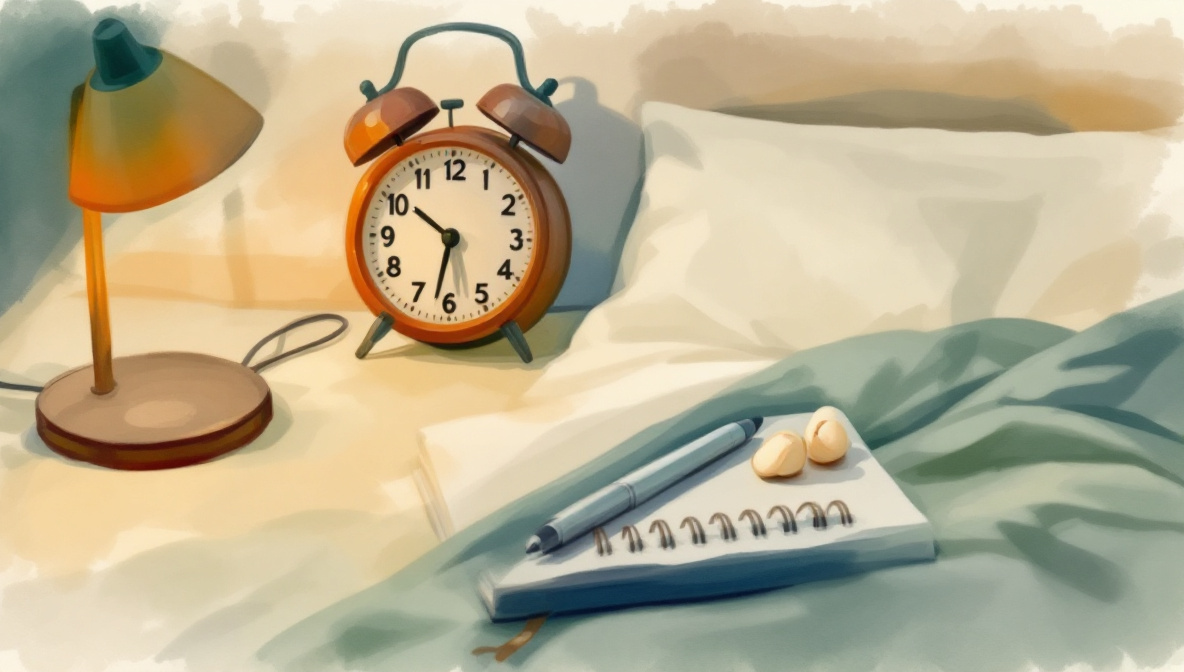
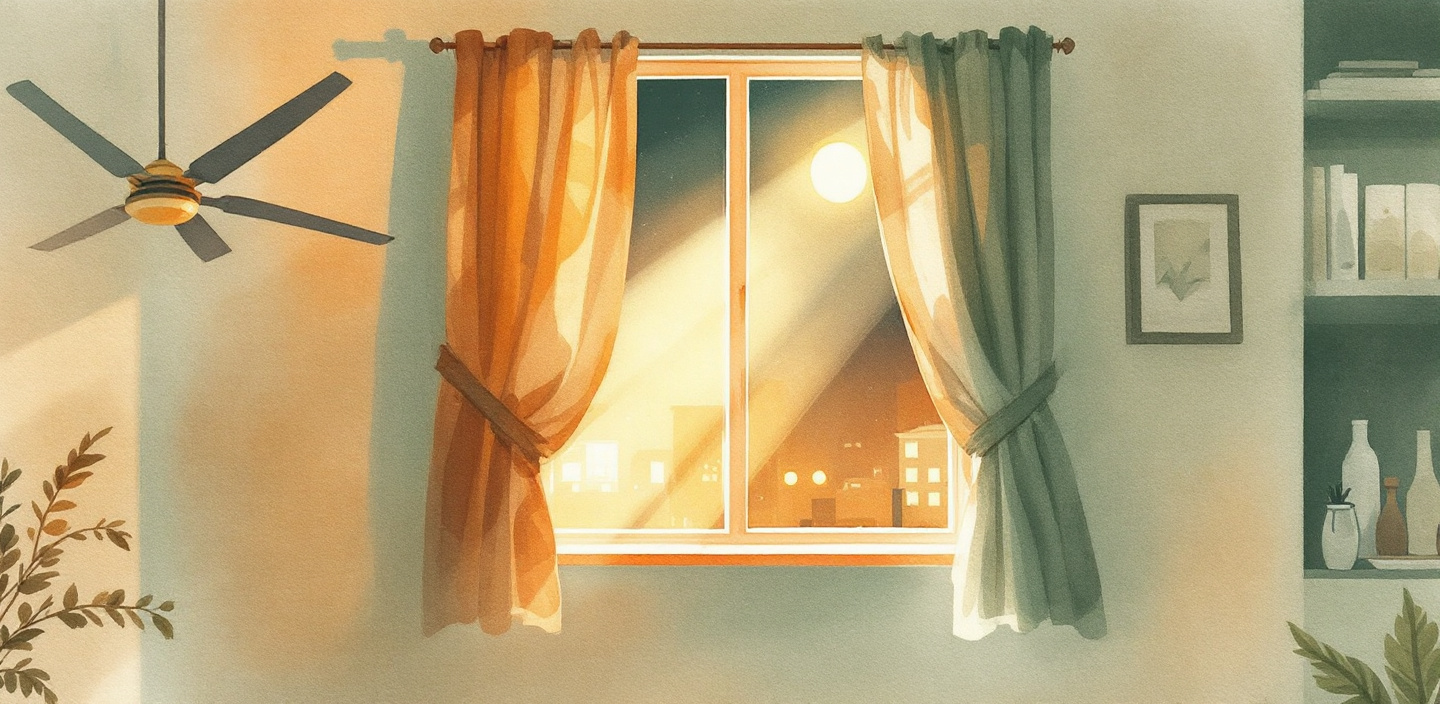
Go dim right now. Kill the ceiling lights, keep one warm lamp, cool the room a notch, and lengthen your out-breath while you soften your jaw, because boring physical cues tell the watchful part of you that night has started and the guard can step back. Bodies believe signals more than pep talks. I start there.
Have a cut-off. When you feel clearly wired and nowhere near drowsy, leave the bed for a quiet chair in dim light and do something lightly dull, then return only when your eyes feel heavy. Keep tomorrow's wake-up fixed even after a rough night. Morning light helps your clock learn.
Brains hate open loops. Unread email, money fear, work friction, body tension nudge the watcher in you to stay on guard, so heart rate sits high and replay mode arrives at lights-out just when you want quiet, and drowsiness keeps its distance. Sleep answers safety cues. Your system takes hints.
Set what you can control. Keep wake time steady, end caffeine earlier, get outside light soon after waking, and protect late evenings from big decisions. Give the day a clean close on paper so tomorrow has a place to live that is not your pillow.
Make a gentle ramp. Choose an hour when lights go low and noise drops. Shift news and email earlier so the mind feels done for the day, then protect the last stretch so it is simple and repeatable, because bodies learn through steady cues much more easily than through last-minute willpower.
Give worry a shelf. Write tomorrow's tasks with the first tiny action beside each and decide when you will look again; cap it at five minutes and stop, even if spelling is off or the page is messy, because your brain cares that it is captured; neatness can wait. Scrappy wins.
Anxiety and heaviness often turn up together. The mind races while the body feels like wet sand; bedtime becomes a stand-off and you start dreading tomorrow. I go bottom-up here: morning light and small movement that ask very little. Eat a decent meal that lands earlier than your phone would suggest.
Work may be the engine. If overload is fuelling both the worry and the flattening, pick one change you control and trial it for a few days; for a plain map, read this: Burnout symptoms at work: what should I look for, and what can help?. Unsure whether low mood or boredom fits better? Try this: Am I depressed or just bored?.
Bring facts that help. Note when you lie down, roughly how long till drowsy shows up, what wakes you at night, and which substances are in play; add the one thought that shouts at lights-out. Those five lines give us a solid start without turning your evening into homework.
We work in experiments. One week we keep wake-up steady and dim the house earlier; the next we try a short worry list or we move caffeine to a safer hour, and we watch what your system actually does. Lists are only hints.
I am Satlaj Sachan, counsellor in Bengaluru, practising since 2015. I work with adults roughly 25 to 45.
Take one tiny step. Dim one lamp and put the phone to charge outside the bedroom, then write the first tiny action for the task you fear most tomorrow and drop the pen; your body reads this as permission to stand down for the night. If sleep does not come, get up for a few minutes and keep it dim. That's enough for tonight.
What should I do when I wake at 3 am and feel wired?
Avoid the clock. Give it a short chance with low-effort attention like noticing distant sounds or the feel of the sheet. If you stay alert, leave the bed for a dim chair and do something bland until your eyes feel heavier, then return. Hold wake-up steady even after a rough night.
How long should I wait before getting out of bed?
Use feel over precision. Around twenty minutes suits many, but the real marker is this: you feel wired and nowhere near sleep. Leave the bed for a dim corner and do something lightly dull. Return only when your eyes grow heavier. This retrains the bed to mean sleeping rather than wrestling.
Does melatonin or medication help with anxious nights?
Some people benefit. Others feel foggy or wake early. Keep routines steady while you decide, and avoid adding or stopping any pill on a bad night. Put changes through a calm day.
Is napping okay if night sleep is poor?
A brief, early afternoon nap can take the edge off. Keep it short and earlier so it does not push bedtime out. If you wake groggy and nights drift later, skip naps for a few days and add morning light instead. Use how you feel at 9 pm as your guide, not the clock.
Should I drink alcohol to knock myself out?
It can knock you out fast and then fragment the second half of the night. You may wake early and unsettled. If you drink, finish earlier and keep it lighter while you test other sleep supports. If drinking is creeping up to cope with nights, mention it in your next medical visit.
Written by Satlaj Sachan, a counsellor in Bengaluru working Book a first conversation.