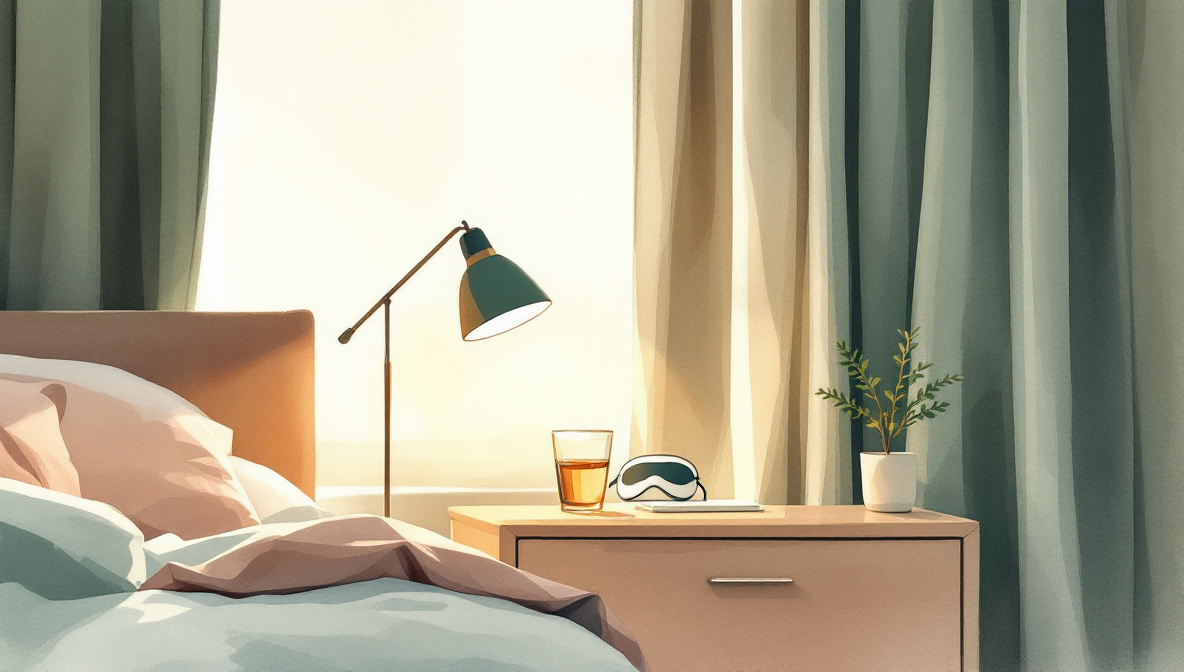
Sleep gets easier when your body feels safe and slightly bored, and your head has a place to park worries. Small shifts for evenings, daytime anchors, and what to do at 3 am.
Short answer. Sleep comes easier when your body feels safe and a bit bored, and your head can park worries. Dim earlier, keep the phone out of reach, write two things for tomorrow, and breathe out a little longer. Treat awake spells as quiet rest so pressure drops and sleep has a chance.
In short:
Screens wake the body. The mix of bright light and moving feeds tells your system the day is still happening, while the chance of a late message keeps you on alert when you would rather slide toward drowsiness. I still notice that blue face-glow in a lift lobby late at night, and it reads as effort.
Loose ends pull you upright again. Unsent emails and an open laptop on the dining table nudge the brain to review the day all over again. Caffeine late or alcohol keeps sleep shallow and ragged, and mornings then feel spent before they start. That loop repeats when you collapse into bed with the house still lively.
Notice patterns before you tinker. Write down the time of your last coffee, any naps, the last message you answered, and whether there was an argument near dinner. Two nights of notes in a tiny notebook beat memory on a foggy morning. Then you can change one thing with less guessing and more steadiness.

Choose dull on purpose. When your eyes stop chasing novelty and the room dims earlier, your system turns down its alarms; boredom signals safety, which lets drowsiness form without you wrestling for it. I like the kind of routine that asks less of a tired body than ambition does at 11 pm.
Rest still helps on messy nights. Lying quietly with eyes closed and a slow, longer out-breath can lower demand on the body, and a warm hand on your belly often softens spirals. A small pen on the bedside table wins at midnight more often than an app that wants attention.
Morning light resets clocks. Step onto a balcony or near a window soon after waking and let daylight reach your eyes for a few minutes, and your body will anchor the timing that later releases sleep pressure without any clever work at bedtime. This single change often helps Monday nights after weekend lie-ins.
Pick a wake time and protect it most days. Regularity carries you further than tricks, and a short walk or a few flights of stairs in the afternoon gives your system another cue it can trust. Keep caffeine earlier for a week and see whether evenings feel a little less buzzy.
When evenings run hot, bedtimes often feel wired. A brief reset before dinner helps: drink water and cool off in the bathroom for five minutes, then let tempers finish their arc elsewhere. If you want a concrete move for tense nights, learn one from this: How do I control anger and stress?.
Keep the lights low. Staying in bed while your chest buzzes can pair the mattress with irritation, so if you are restless for a while, get up and sit somewhere dim with something boring; return only when sleepiness arrives again. Think of this as quiet rest and give the house a chance to settle.
Loud snoring with choking, reflux, restless legs, or persistent pain point to medical sleep issues; see a doctor to check.
Avoid clock-checking because that number wakes the accountant in your head. Choose one quiet helper: a slow podcast out of reach with a sleep timer, or a body scan while you listen to the fridge hum in the kitchen and count the exhale. When lightness returns, walk yourself to bed and let the covers take over.
Two lines are enough. Fifteen minutes before dinner, write the loudest fear in one sentence and name what sits in your control. Then sketch the smallest next step that earns you permission to pause the topic at night. Close the book and stand up for a minute so the body gets a physical full stop.
Late chats and work threads often push past bedtime. Try one plain line by 9 pm: 'I am logging off now; I will read this tomorrow.' Or this: 'Let's pick this up in the morning.' If attention still snags, borrow a move from here earlier in the evening: How to focus when anxious?.
Rafiq means the friend who walks with you. We go slow enough. I pay attention to the real shape of your evenings and days, and I say what I actually think, even when it lands a bit unwelcome. Kind and frank can sit at the same table.
I am Satlaj Sachan, a counsellor in Bengaluru, practising since 2015. My work is with adults roughly 25 to 45. In sessions we build two steady anchors for morning and shrink evening load until you have a kit for wakeful hours. For pacing and breaks, this is a clearer overview: How often do people go to therapy?.
Tonight, pick one tiny step and stop there. Put a notebook by the bed. Leave your phone outside the room. Choose a morning anchor now, like stepping onto the balcony for daylight, then breathe out a little longer while the lamp is still on, tonight.
Is melatonin a good idea at bedtime?
Sometimes it helps with timing and opens the window when sleep wants to start. Ask a physician before you try it so dose and timing suit your body and evening. Also ask how many nights to test, what to pause during the trial, and when to stop if nothing changes.
Why do I jolt awake at 3 am and feel wired?
Bodies drift lighter in the second half of the night as stress hormones rise before morning. Add worry, alcohol, reflux, pain, or a late argument and the wake-up sticks. Keep light low and breathe out longer. Then pick one boring thing until drowsiness returns.
Should I stay in bed when I cannot sleep?
If you feel tense and annoyed, staying put often pairs the bed with struggle. After a while, get up and sit somewhere dim with something boring; return when your body offers a yawn. Save decisions for daylight and keep the lights low so the house keeps its night-time cue.
Do blue-light filters and night mode actually help?
They soften glare and can be kinder on your eyes. The scrolling still wakes your attention. Put the phone in another room and set a simple alarm. Keep a cut-off time for messages and hold it steady for a week.
How long before coffee stops affecting my sleep?
Sensitivity varies by person. Keep caffeine to the earlier half of your day for a week and watch what changes. If evenings still feel jumpy, pull the last cup closer to lunch and retest. A tiny log on paper helps you decide from notes instead of guesswork.
Written by Satlaj Sachan, a counsellor in Bengaluru working Book a first conversation.