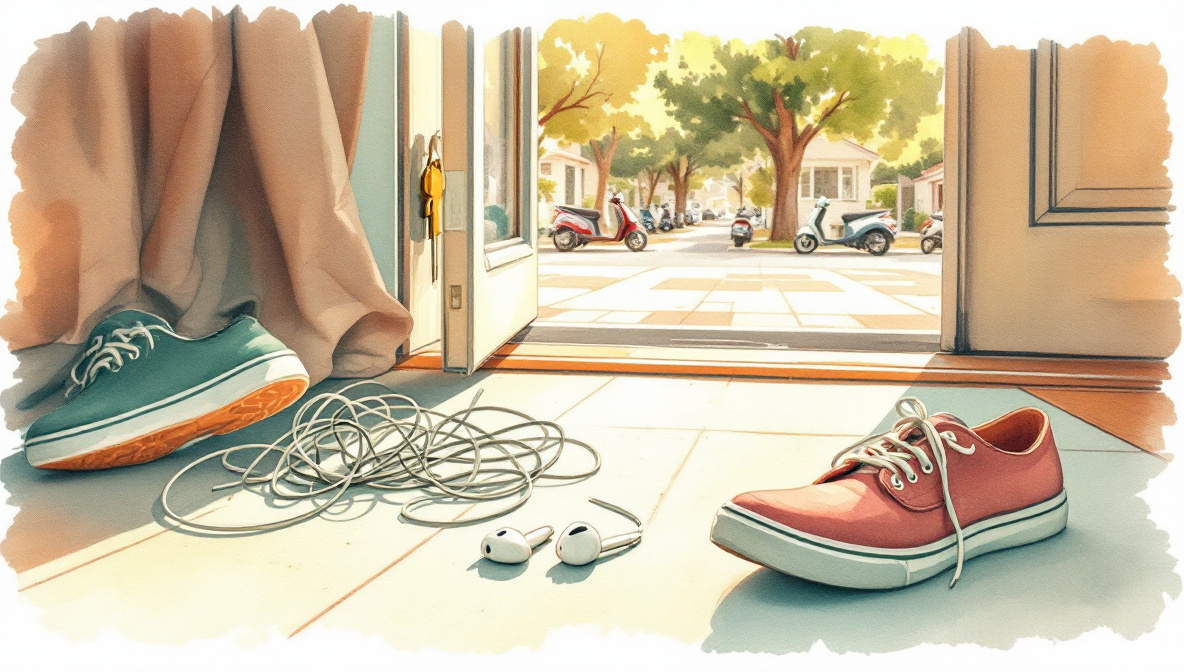
Remove the soundtrack for one short walk. Expect itchy, noisy minutes; then attention often steadies. Tiny anchors help, and you finish with a simple reset you can reuse.
Short answer. Walk once without headphones and let the street set the pace. The first ten minutes can feel itchy and loud, sometimes a touch exposed; then attention steadies and your steps often choose themselves. I like this because the world enters on its own time and you get a clean run at noticing, which is rare and oddly kind.
In short:
No soundtrack today, friend. Pace slips back towards the one your body would pick when nobody is pushing it along, while the city arrives in layers: scooter buzz, bus wheeze, a pressure-cooker whistle from a balcony, and a cycle bell. Without a voice in your ear, attention spreads and then settles, like eyes adjusting when you leave a dim lift lobby for bright pavement.
The first feeling is often itch, a small urge to reach for volume or brightness, anything to fill the space that just opened. I keep seeing shoulders drop a notch when someone lets the street get a say, and eyes begin roving the way they do after long screen hours. Boredom shows up, then a little relief.

Keep it tiny, deliberately. Pick a short loop you already know and set a soft timer before you leave. Put the phone where you cannot see its glow, then let your arms swing while you give simple attention to where each foot lands. Think of it as moving through a place with nothing to prove and nothing to record.
If panic nips or your hand keeps ghosting towards a feed, borrow one small anchor and give your senses a single job. Whisper the street names for two poles, or count in quiet fours while you rest your eyes on a parked scooter across the road; it works. If boredom keeps making meaning out of nothing, read Am I depressed or just bored? and separate a long season from a small moment.
If your route relies on a maps voice or alerts, or the area feels edgy, keep one ear connected at low volume and the other free, and choose routes and times that already feel calm to your body. An indoor lap with the balcony door open also counts.
On some evenings I take a dusk loop under a gulmohar near home and end early if the horns feel too sharp.
Boring on purpose helps. Choose a plain route near where you live or work, leave the step count and pace graphs alone for ten minutes, and let your body find a speed without trying to impress an app or future-you with graphs. You can hum once, then let silence do the rest.
Input can be armour. If your days are stuffed with work and worry, the need for constant audio may be your nervous system shouting that it is overfed; read Burnout symptoms and treatment: what should I look for, and what can help? and lift two words you can use with your manager or doctor this month. End the loop with cool water on face or hands, then sit for a minute before you open anything.
Let boredom spread briefly. When you stop feeding the next thing into your ears, small pockets of attention open for odd ideas, a mango vendor's new cart on the corner, a cooler patch of shade, or a movement that feels kinder to shoulders that have been tight all day. You also notice the exact place you had enough and wanted to turn back, which is worth knowing.
On some evenings the quiet feels lonely; if that bites, read How can I be alone without feeling lonely? and carry one idea into your next loop so the silence has company. Doorway, one minute tonight. Stand with your phone in your pocket; look for the farthest sound you can hear and stop when you find it; that is the whole task, and it counts.
Can I keep one earbud in for safety?
Yes. Keep the volume low and leave one ear free so traffic and people reach you. Swap sides if one ear gets tired. The useful bit here is choice; you are picking when to invite input. On a quiet lane near home, remove the earbud for the last block and watch what changes.
How long should the first walk be?
Short wins. One small loop near home or work is enough, and finishing while you still have a little room helps you try again another day. Set a soft timer and stop when it rings. If the only gap you have is five minutes between meetings, use that and let the pace settle by itself.
What if my only option is a busy road?
Use the calmer bits you do have: apartment corridors, building compounds, a staircase lap, the lane behind the shops, or a terrace. Keep one ear free and make eye contact with drivers when crossing. Go at a quieter time if that is possible. An indoor circuit with a window open also works; the point is attention, not distance or speed.
Will this help me sleep?
Some people find a short, quiet walk softens the buzz before bed. Keep it low effort, dim the screen after, and end with cool water on your face or hands. Others prefer a morning or mid-afternoon loop. Test different times in your actual week, notice what steadies you, and keep the version that fits.
Does this replace the gym or counselling?
Treat it as a tiny attention reset. Keep your exercise plans as they are. If you want to talk to someone, this can sit alongside it. For help deciding who to see, read Counselling or therapy: what is the difference, and who should I see?.
Written by Satlaj Sachan, a counsellor in Bengaluru working Book a first conversation.