
Overthinking is a loop that feels like solving and keeps you stuck. Here is how I pause it in the day and at night, with plain steps you can try today.
Short answer. You stop overthinking by pausing the loop, moving it to body or paper, and giving your mind a smaller, clearer job. Thoughts will still arrive; the grip changes. Train this during the day so the skill is ready at 2 am.
In short:
I use overthinking to mean a loop that pretends to solve things and instead keeps you circling. Loops feel like control. You revisit the same angles, recheck facts you already checked, rehearse talks that never happen, and your body climbs into alert as if a quiet siren sits under your ribs. It is tiring.
By day, loops hitch a ride on work, money, health, or whether that message was rude. Night strips out noise and makes thoughts sound louder, and a bed can turn into a planning desk unless you protect it, which is why many people wake tight-chested and foggy. That mix feeds itself. It can form quickly.
Planning creates a next physical action you can do in ten minutes; looping keeps asking for a guarantee. Useful thinking changes when new information lands; looping repeats with the same inputs. Planning tolerates good-enough; looping hunts for perfect and then reopens. Planning finishes for now; looping whispers 'one more check' and drags you back.
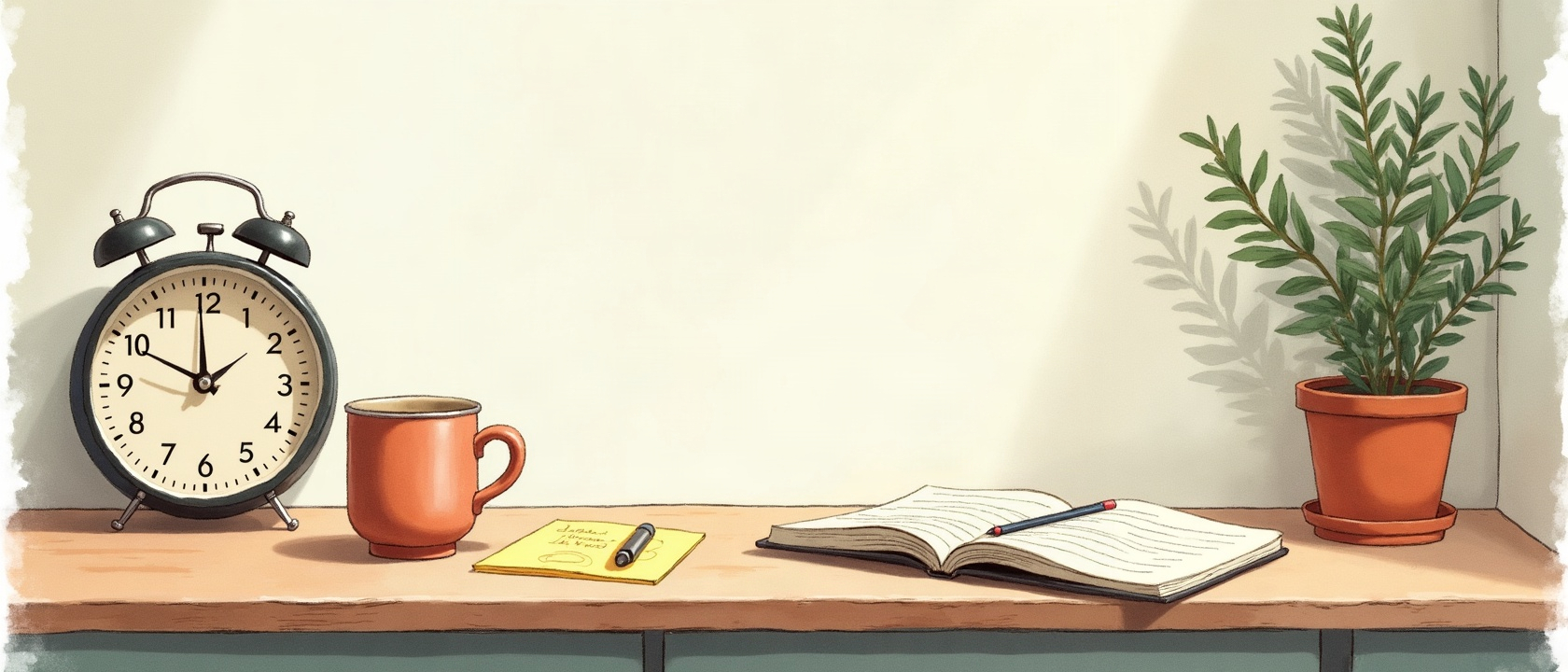
Go very small first. Give your brain a job so clear it cannot argue while your body catches up, because a calmer body lowers the noise your mind keeps misreading as threat and that alone makes room. Name what is happening, change your position in the room, let your hands do something simple and verifiable.
Night really is different. With less input, every thought sounds louder, so park it to paper and give bedtime a simple ritual: a small notepad, one-line worry title, one next step, then say, out loud, "Tomorrow." The content matters less than doing the same tiny sequence in the same order.
If you are staring at the ceiling after twenty minutes, get up. Keep lights low, skip scrolling, and choose a dull, repeatable task like rinsing a cup or folding two shirts while you breathe out longer than you breathe in. Warm feet, a slightly cooler room, a covered clock, and dark chargers lower bait.
For most night loops, consistent daytime practice makes the night version shorter and less sticky.
Brains predict and protect. Bodies set the volume, and when you are stretched thin or under-slept, a normal scan for danger misfires into constant checking, and planning loses the plot and turns into scanning, so the mind searches for certainty while the body quietly acts as if a siren were already blaring.
Inputs matter. Caffeine late in the day, skipped meals, hangovers, and a lit screen in bed all raise arousal, which your brain can mistake for a problem to solve. If coffee leaves you buzzy or shaky, this may help: Is it normal to feel anxious after drinking coffee?.
Loops often ride on anxiety or on a low, heavy mood. The shape is different and the care changes, so naming which one is louder today helps you choose tools that fit. If you want a clear, practical map, read this next: Am I depressed or anxious?.
We make it visible. I will ask what it costs you, when it shows up, what your body does, what you have already tried, and where a tiny change would be felt fastest, then we sketch one small practice for the coming week and decide where it lives in your actual day.
Bring one or two examples, the sentence your loop keeps repeating, the picture of the worst that your mind runs, the thing you avoid because of it, and the times of day that are hardest. Write them down. Clear inputs make a faster start, and you will leave with one or two small experiments to run.
A first conversation is thirty minutes and free. Booking runs through a form first, and we can speak in English or Hindi. If you prefer to look around before you talk to me, compare profiles on a directory like TheMindClan and pick someone whose examples sound close to your life.
Treat this like training. Tiny, repeatable drills cut grooves your brain can find at 3 am, and the cost is low if you keep them short and boring, then return to your day without fanfare. Track stuck minutes, not feelings, and aim for quicker exits instead of perfect calm or a silent mind.
How do I stop overthinking quickly at work?
Step away from the screen for two minutes. Put both feet flat, sip cold water, and name the loop out loud. Write one boring, visible action you can do next and put only that in your calendar. Do the action with your phone in another room, then return to the task in front.
What should I do when I wake at 3 am and my mind starts racing?
Keep the room dim. Write a one-line title for the worry and one next step on a small notepad, say "Tomorrow," then lie back down. If you are still awake after a while, get up, keep lights low, and do a dull, repeatable task until your eyes feel heavy again.
Is writing worries down just another way to feed them?
It can feed them if you write essays. Keep it small and ritualised: a title and one next step, same pen, same pad, same few words, then stop. That repetition teaches your brain that the thought is stored and retrievable tomorrow, which is the only promise it is chasing at night.
Can counselling stop overthinking for good?
Counselling changes how you meet thoughts and how you organise your day around them. We build small habits that make loops shorter and less sticky, and we check the conditions that feed them. Some people need other supports too. There is no universal switch, and we move at your actual pace.
Should I replace every negative thought with a positive one?
Replacement often turns into arguing with yourself and gives the loop more airtime. Name the loop instead, park it to paper, and give your brain one small, concrete action that changes your position in the room. That is kinder at 2 am and more practical at 2 pm.
Written by Satlaj Sachan, a counsellor in Bengaluru working Book a first conversation.